
Real Change in Action
Read real examples of how In-School NDIS support has helped children we work with rebuild confidence, engagement and foundational learning skills.
Please Note:
All names and identifying details have been changed to protect the privacy of children and families. These case studies reflect real client experiences over the past three years. Individual outcomes vary depending on each child’s needs, goals and level of support.
3-6: Case Study One
Sophie: 3.5 years old
Strengthening Regulation and Emotional Confidence
Starting Point
Sophie experienced very intense emotions that could last up to an hour once she became overwhelmed.
Transitions and social situations often led to prolonged distress, leaving her family unsure how to help and impacting her participation at early learning.
Her emotions weren’t “wrong” — they were big. She just didn’t yet have the skills to move through them.
Our Approach
Instead of focusing on stopping behaviours, we strengthened the foundations of regulation.
We built:
• Early communication skills
• Sensory awareness and tolerance
• Recognition of body signals before overwhelm
• Simple, age-appropriate calming strategies
Sessions were delivered at home with parent coaching included, helping the family recognise early signs and implement proactive support in real time.
Key Outcomes (within 6 months)
Significant reduction in the length and intensity of emotional overwhelm
Increased ability to communicate needs before escalation
Improved engagement at preschool and increased peer interaction
Calmer transitions at home

3-6: Case Study two
Billy - 5 years old:
Building Foundations for a Confident School Start
Starting Point
As Kindergarten approached, Billy was still building skills across communication, motor development and early learning foundations.
His parents were concerned about focus, instruction-following and independence and whether school would feel overwhelming rather than exciting.
It wasn’t about ability. It was about readiness.
Our Approach
We created a structured developmental roadmap, strengthening core foundations before introducing more complex learning.
Support focused on:
• Communication and motor coordination
• Attention and task persistence
• Early literacy and numeracy readiness
• Independence in daily tasks
Key Outcomes (over 12 months)
Foundational developmental skills strengthened to age-expected levels
Increased independence in completing tasks and daily routines
Improved focus, instruction-following and persistence
Confident and positive transition into Kindergarten in 2026

Case Study One
Bobby - 4 years old:
Preparing for School by Strengthening What Comes First
Starting Point
At four years old, Bobby was building the skills needed for a confident start to school.
Bobby's attention span was short, following multi-step instructions required intensive support, and early learning skills were still emerging. His parents wanted more than just “starting school”; they wanted him to feel capable, confident and ready.
Our Approach
We focused first on strengthening regulation, attention and learning stamina before introducing more complex academic concepts.
Weekly preschool-based sessions targeted:
• Sustained attention and listening skills
• Multi-step instruction following
• Peer interaction and turn-taking
• Early literacy and numeracy foundations
As capacity increased, learning complexity increased — without overwhelm.
Key Outcomes (within 12 months)
Sustained attention increased from 3 minutes to 15–20 minutes
Improved ability to consistently follow 3+ step instructions
Solid early literacy and numeracy foundations
On track for a confident and positive Kindergarten start in 2027

Case Study two
Bella: 10 years old
Falling Behind & Low Confidence
Bella was struggling with literacy, organisation and classroom participation. Confidence had significantly declined.
Our support focused on:
• Foundational literacy skills
• Executive functioning systems
• Structured goal tracking
Over one term, Bella's:
• Reading fluency improved
• Homework completion became consistent and enjoyable
• Classroom participation increased
• Self-confidence visibly strengthened
Bella shifted from avoidance to engagement in learning, socialising and trying new and challenging activities.
Key Outcomes
Foundational literacy skills strengthened
Homework completion became consistent and enjoyable
Self-confidence in learning visibly and measurably improved

Case Study three
Josh: 9 years old
Focus & Organisation Challenges
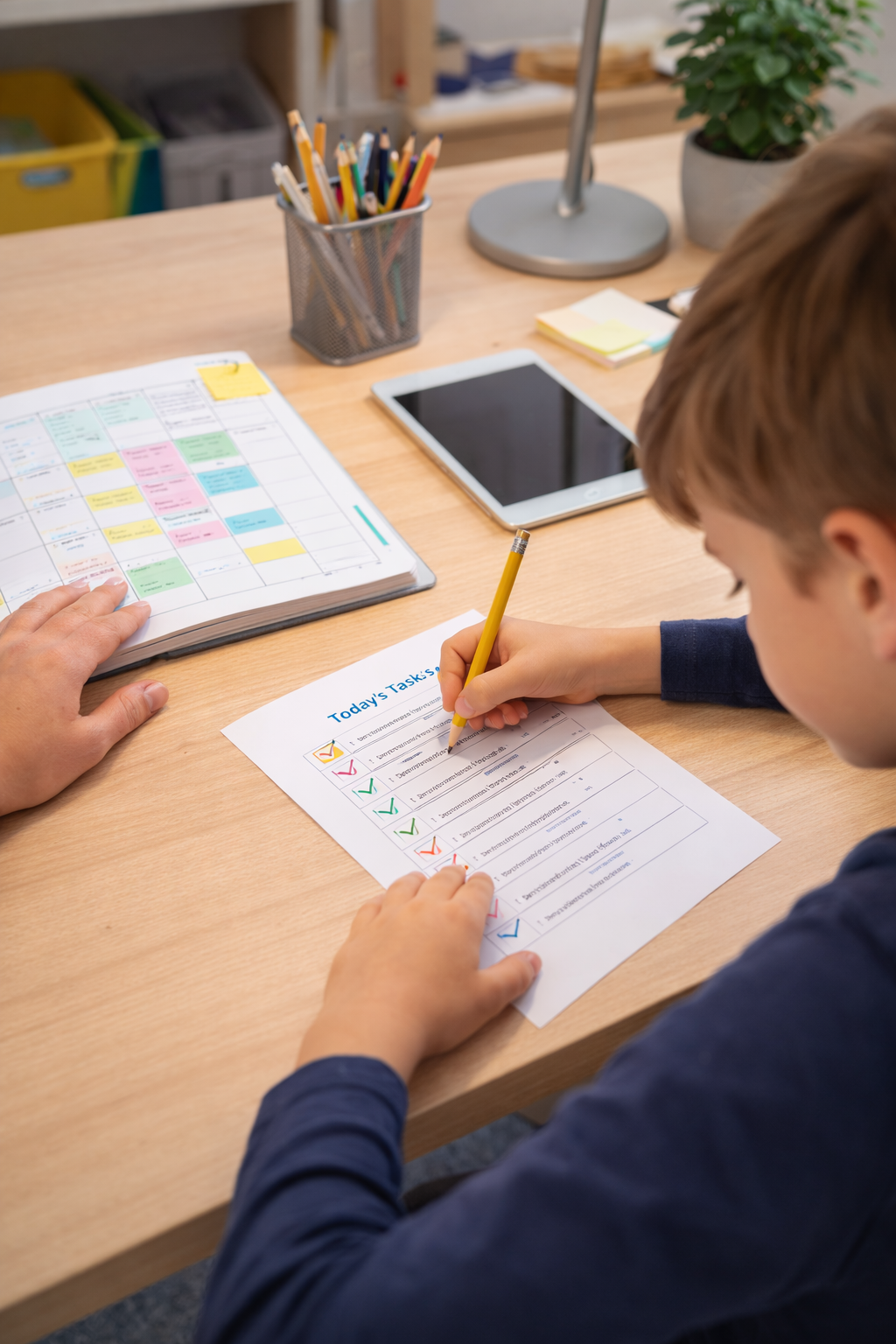
Josh had been experiencing difficulty following multi-step instructions and sustaining attention was impacting academic progress. This has been going on for a number of years before starting with our service.
Through structured executive functioning support and environmental scaffolding, Josh's:
• Task completion improved
• Follow-through and persverence increased
• Frustration tolerance increased
• Parent confidence improved
Foundations of learning and capacity building strengthened. Pressure reduced and confidence significantly increased over just a few short months.
Key Outcomes
Improved ability to follow multi-step instructions
Increased task completion and organisation
Reduced frustration and avoidance behaviours
Case Study three
Ethan: 7 years old
Rebuilding Confidence After a Difficult Start to School
Starting Point
Ethan began Year 1 feeling discouraged and unsure of himself.
After a challenging Kindergarten experience, his confidence had declined. He was reluctant to attend school, avoided learning tasks and had started saying he “wasn’t good at school.”
His parents were worried that his early school experience was shaping how he saw himself.
Our Approach
We focused first on rebuilding confidence and strengthening foundational skills that had been missed during his early school years.
Support included:
• Identifying and strengthening age-appropriate developmental foundations
• Building learning stamina and task persistence
• Supporting emotional regulation within academic tasks
• Gradually increasing complexity to match growing confidence
Sessions created structured success experiences — helping Ethan feel capable again.
We also worked alongside his parents and school to ensure consistency and collaboration.
Confidence returned first. Learning followed.
Key Outcomes
Reduced school refusal and increased attendance
Strengthened age-appropriate developmental skills
Increased confidence and willingness to attempt learning tasks
Improved engagement and enjoyment in school

Want to see these results for your child?
© Copyright 2026. The Child Health & Development Hub Pty Ltd. All Rights Reserved.